The Value of Zero: Rethinking What a Clean Methane Scan Is Worth
Add bookmark
Methane has never had more attention. Satellites, aircraft, drones, and fixed sensors now watch oil and gas infrastructure more closely than at any point in the industry's history, and the numbers they produce matter. Stanford researchers studying six major U.S. production regions estimated that methane emissions cost producers roughly $1 billion in lost commercial value every year.
With that much at stake, the industry typically measures a detection vendor's worth by how many problems it finds. Finding more leaks looks like delivering more value. I'd argue the opposite. For most operators, the most valuable result an aerial survey can return is nothing at all.
The Results Nobody Celebrates
We used to have people on our own team get frustrated when a scan came back clean, as if they hadn't found anything worth reporting. It took a while to get everyone to see it the other way: a clean scan is a company finding out, in real time, that nothing's wrong. That's worth more than most people give it credit for.
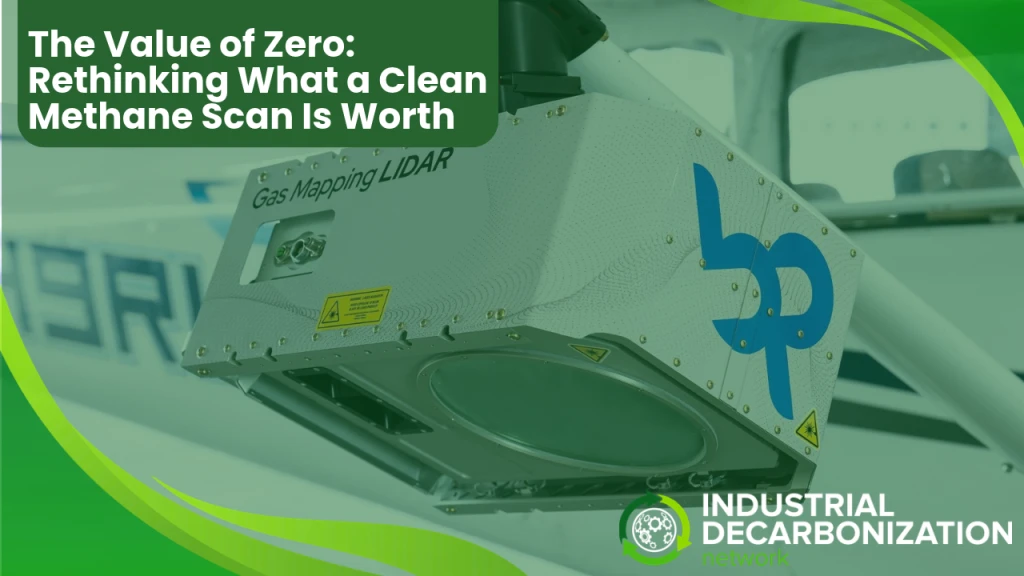
It's also most of what we deliver. Of the hundreds of sites our aircraft survey each day with Gas Mapping LiDAR, the majority come back clean: no leak, nothing to fix. To a lot of people in this industry, that looks like a wasted flight. I think it's the actual product.
At a recent company town hall, someone pushed the point further: if our customers eliminate their emissions, aren't we out of business? My answer was no, and the reason comes from accounting. Our customers are multibillion-dollar companies with thousands of skilled accountants. They keep their books well. Every year, they still bring in an auditor to prove it. Nobody considers a clean audit a waste of money. It's the evidence that the system works.
Methane measurement can play the same role, without the wait. Instead of learning at an annual audit whether equipment is performing, an operator gets a fast, low-cost confirmation within a day of the flight. That confirmation used to require a crew, a truck, and a handheld camera at every site.
Explore the 2026 Event Guide
Methane Mitigation America Summit: 2026 Agenda
Explore full session details, 2026 speaker faculty, testimonials from our community, what's new for 2026 and more!
A Zero Is Only as Good as the Measurement Behind It
There is a catch. A zero has value only if you can trust it. If a survey can't reliably see smaller leaks, or can only say a problem exists somewhere on a pad, a clean result doesn't prove much. It's just an absence of evidence, not evidence of absence.
That's why sensitivity and precision sit at the center of this argument. When the detection threshold is low and the probability of detection is high, a clean result means something specific: no emissions above a known rate were present when the aircraft passed over. Our Gas Mapping LiDAR, for example, detects emissions as small as 1 kg/hr at a 90% probability of detection and pinpoints sources to within about two meters. Precision is what gives a zero its credibility. It's also what makes the five sites in 100 that aren't clean fast to fix, because the crew arrives already knowing which fitting to look at.
Natural gas buyers and reporting frameworks like OGMP 2.0 increasingly expect measured, not estimated, performance. A clean scan from a trusted instrument is exactly that kind of evidence.
How Operators Are Putting Zero to Work
In practice, operators are using clean results in three ways:
- Crews go only where they're needed. Field teams start the day with the report, skip the clean sites, and head straight to the handful that need attention. Sending someone to inspect a site that turns out to be fine is chasing a ghost.
- Fewer miles, fewer risks. Research shows that more than half of fatal occupational injuries in oil and gas come from transportation incidents, not from wells or equipment. Every unnecessary drive to a remote pad is exposure an operator can remove.
- Zero becomes a target. Coterra (now Devon Energy, following the companies' merger completed May 7, 2026) built an equipment-level emissions scorecard from repeat aerial surveys and, since 2024, has built direct measurement data into the methane goals tied to internal compensation. Between 2022 and 2025, the company cut Permian methane intensity by 64%. Quarter after quarter of clean results also build a site-by-site record operators can show regulators, partners, and customers.
Measuring Success Differently
None of this means leaks aren't worth finding. They are. Every leak repaired is gas back in the pipe and product that can be sold. But if the industry measures detection only by the number of problems it uncovers, it quietly rewards a program that keeps finding the same issues over one that helps eliminate them.
The better goal is a steadily rising share of clean results, backed by measurement strong enough to trust. That goal holds no matter what any single regulation requires, because the business case rests on recovered product, labor spent wisely, and fewer people on the road for nothing.
I'd like to see our industry celebrate zero the way a finance team celebrates a clean audit: not as a non-event, but as the outcome of all that work was meant to produce. When an operator can look at a quarter's worth of scans and see hundreds of sites with nothing to fix, that isn't the absence of value. It's the proof of it.
References:
Article Sources: Stanford methane study · Oil and gas fatality study (PMC)