Industrial Decarbonization Network's Monthly News Round-Up [September 2026]
Add bookmark
Welcome to this month's Industrial Decarbonization Network Monthly News Round‑Up for September.
Each week, we highlight the latest developments shaping methane management and mitigation, ESG reporting, regulatory compliance, sustainability, and low‑carbon innovation across the industrial landscape. This new monthly summary brings those key updates together in one place, offering a clear view of the trends, announcements, and insights that defined the past month.
We know that, as leaders in the oil and gas sector, your time is stretched, and in such a fast‑moving industry, it's easy to miss key developments. From policy shifts and technology developments to project milestones, emerging best practices and industry collaboration, this monthly news round‑up captures the stories most relevant to operators, decision‑makers, and sustainability leaders, helping you stay informed without adding to your workload. Our aim is to provide a concise, practical overview that supports your work and keeps you connected to the rapidly evolving decarbonization landscape.
New Report Available Now
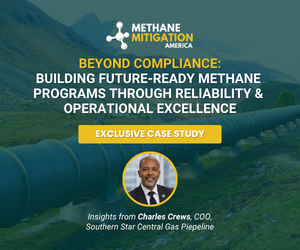
Beyond Compliance: Building Future-Ready Methane Programs Through Reliability & Operational Excellence
Including an Exclusive Case Study Featuring Insights from Charles Crews, COO, Southern Star Central Gas Pipeline
Download NowCompliance & Regulation:
[September 11, 2026] THE U.S. EPA is reportedly preparing to weaken methane requirements for low-producing "stripper wells" across the United States, reducing leak inspection obligations and equipment upgrade requirements for hundreds of thousands of older oil and gas assets. Supporters argue the move could help keep marginal wells economically viable and support domestic energy production, while critics warn it could increase methane emissions from a segment of the industry already responsible for a disproportionate share of methane pollution. [Source: ProPublica]
As regulations continue to fluctuate at the state and federal levels, operators face renewed questions around balancing emissions reduction goals, economic pressures, and evolving compliance expectations. This development underscores the need for methane management strategies that can withstand regulatory change. Rather than being driven solely by compliance, methane reduction is increasingly being recognized as a commercial imperative, helping operators reduce product loss, improve operational efficiency, and generate measurable business value.
Key takeaways:
- The proposed changes would ease methane compliance requirements for hundreds of thousands of low-producing U.S. oil and gas wells.
- Stripper wells account for a relatively small share of production but are considered a significant source of methane emissions.
- The proposal reflects a broader policy debate around balancing energy production, operational costs, and methane reduction goals.
- If implemented, the changes could have major implications for future methane emissions management strategies across the U.S. upstream sector.
[September 28, 2026] The European Commission is considering a one-year postponement of methane reporting requirements for imported oil and gas, following concerns from member states and international suppliers around compliance complexity and energy security. If approved, the delay would provide importers with additional time to prepare for the regulation while maintaining the EU's broader methane reduction ambitions. [Source: BOE Report – Reuters Coverage]
As operators and suppliers continue preparing for stricter methane reporting requirements, regulatory certainty remains a critical issue. While the EU Methane Regulation is expected to drive greater transparency across global energy supply chains, ongoing discussions around implementation timelines demonstrate the practical challenges associated with collecting emissions data across complex international supply networks. For many organizations, the focus is increasingly shifting toward building robust measurement and reporting capabilities that remain effective regardless of potential policy adjustments.
Measurement, Reporting, & Verification:
[September 15, 2026] Petronas, TotalEnergies, and JOGMEC have partnered to establish the Southeast Asia Methane Emissions Technology Evaluation Center (SEA METEC), a new regional hub focused on advancing methane measurement, monitoring, reporting, and verification capabilities. The initiative aims to accelerate the deployment of methane management technologies and support operators in meeting increasingly stringent emissions reporting expectations. [Source: Rigzone]
Key takeaways:
- SEA METEC will serve as Southeast Asia's first dedicated methane technology evaluation and testing centre.
- The initiative will focus on improving methane measurement, monitoring, reporting, and verification practices across the region.
- Partners will support the adoption of technologies and methodologies aligned with OGMP 2.0 reporting requirements.
- The collaboration reflects growing momentum behind data-driven methane management and emissions transparency efforts worldwide.
[September 28, 2026] The Oil and Gas Methane Partnership (OGMP 2.0) reports that participating companies are increasingly moving beyond target-setting and focusing on implementation, using improved emissions data to identify methane sources and prioritize mitigation efforts. The update reflects a broader industry shift toward measurement-based methane management and operational action. [Source: OGMP]
Key takeaways:
- Improved data is helping operators identify emissions sources more effectively.
- Measurement-based reporting continues to gain momentum across the industry.
- The trend reinforces the shift from compliance-focused reporting to operational methane performance.
- The continued growth of measurement-based approaches is expected to play a key role in helping organisations demonstrate progress against both regulatory and voluntary commitments.
[September 30, 2026] Kazakhstan's national gas company, QazaqGaz, has joined the Oil and Gas Methane Partnership (OGMP 2.0). The company has also announced a partnership with Carbon Limits to support methane monitoring, emissions inventories, and reduction initiatives across its operations. [Source: Trend News Agency]
Key takeaways:
- QazaqGaz operates approximately 76,000 km of gas infrastructure, meaning improvements in methane measurement could have a significant impact across Kazakhstan's gas value chain.
- The move reflects growing adoption of measurement-based reporting frameworks in emerging gas markets, not just North America and the EU.
- More than 140 companies now participate in OGMP 2.0, reinforcing its position as the leading framework for methane measurement, reporting, and mitigation in the oil and gas sector.
Technology & Innovation:
[September 11, 2026] Researchers at the University of Southern California have developed a low-cost, IoT-enabled methane monitoring system designed to continuously detect emissions from abandoned and orphaned oil and gas wells. The technology aims to address one of the industry's most persistent methane challenges by providing real-time monitoring at a fraction of the cost of conventional inspection methods, helping operators and regulators identify intermittent leaks that may otherwise go undetected. [Source: Tech Xplore]
Key takeaways:
- The monitoring system is designed to provide continuous methane measurements rather than relying on periodic site inspections.
- Researchers estimate there could be millions of potential abandoned well leak sources across the United States.
- The prototype uses commercially available components, helping to keep deployment costs relatively low.
- The development highlights growing industry and regulatory attention on methane emissions from legacy oil and gas infrastructure.
Industrial Decarbonization Network's 'Featured Insight of the Month':
Whether you're refining your methane measurement programme, preparing for new reporting obligations, or evaluating your overall methane strategy, The Operator's Methane Mitigation Playbook provides expert guidance on the frameworks, technologies, and regulatory developments influencing methane management across the oil and gas sector. Discover how leading organizations are approaching compliance, measurement, and operational methane reduction in an increasingly data-driven environment. Access the latest IDN Guide here!
Stay connected with the Industrial Decarbonization Network as we continue to track the technologies, strategies, and standards shaping the global pathway to industrial net‑zero.