EU Methane Regulation: Why Competent Authorities Will Determine Implementation Success
How enforcement frameworks, regulatory oversight, and national implementation will shape the future effectiveness of Europe's methane reduction strategy.
Add bookmark
EU Methane Regulation: Why Competent Authorities Will Determine Implementation Success
As implementation of the EU Methane Regulation (EUMR) progresses, attention is increasingly shifting from policy design to practical enforcement. While the regulation sets clear timelines for Member States to designate Competent Authorities (CAs) and establish penalty regimes, compliance has been inconsistent. Several Member States experienced delays in appointing Competent Authorities during the early implementation phase of the regulation, highlighting differing levels of preparedness across the EU.
A central theme in the current landscape is the emergence of the "Network of Competent Authorities" (EU Methane Regulation Expert Group), which serves as a vital bridge between national implementation and EU-level policy. This group is increasingly influential, not only in harmonising enforcement but also in advising on secondary legislation and complex supply chain solutions.
Key challenges identified include:
- Resource and Expertise Gaps: Many CAs may lack the technical expertise required for complex methane monitoring, necessitating a heavy reliance on third-party verifiers.
- Regulatory Inconsistency: The flexibility granted to CAs regarding the approval of alternative technologies and the granting of derogations could lead to inconsistent enforcement across the EU.
- Enforcement uncertainty: Differences in the pace of implementation and enforcement across Member States may create varying levels of regulatory certainty for regulated entities during the transition toward full implementation.
1. Status of Member State Compliance and Enforcement
The transition to the new regulatory landscape requires Member States to complete two primary tasks: designating a Competent Authority and establishing a penalty regime, based on Article 33 of the regulation.
Appointment and Notification of Competent Authorities
The designation of Competent Authorities has been one of the first major implementation challenges associated with the EU Methane Regulation. Differences in administrative capacity, institutional structures, and national priorities have resulted in varying levels of preparedness across Member States. These early implementation challenges highlight the complexity of translating EU-level methane policy into consistent national oversight frameworks. The effectiveness of the Regulation will ultimately depend not only on the existence of Competent Authorities, but also on their resourcing, technical expertise, and ability to coordinate with regulators, operators, and verification bodies across the value chain.
The Penalty Regime (Article 33)
Member States had one year to establish a penalty regime based on Article 33. The pace at which Member States establish enforcement and penalty frameworks will play a critical role in determining how consistently the regulation is implemented across Europe. Effective enforcement mechanisms are likely to be a key factor in building regulatory certainty and driving long-term methane reductions.
2. The Institutional Role and Network of Competent Authorities
The enforcement of the EUMR is not localised to individual Member States but is an institutionalised, cooperative effort between national authorities and the European Commission.
The Network of Competent Authorities
Officially known as the EU Methane Regulation Expert Group, this body has emerged as an important forum for coordinating implementation, sharing experience, and supporting greater consistency across Member States. Its functions include:
- Providing Clarity: Establishing a Q&A tool (currently for internal communication between the Commission and Member States) to clarify legislative ambiguities.
- Influencing Policy: The network provides feedback that informs Council decisions, such as the approval of certification and tracing plans for complex supply chains.
- Developing Secondary Legislation: Beyond implementation, the network is tasked with assisting the Commission in drafting secondary legislation, acting as a filter for what is technically and administratively feasible.
Identity and Independence of CAs:
In many Member States, Ministries play a significant role in the operation or oversight of Competent Authorities, highlighting the close relationship between methane regulation, energy policy, and security of supply considerations.
- Ministry Involvement: In many cases, the responsible Ministry either acts as the CA or provides heavy guidance.
- Security of Supply: The regulation allows for a lack of total independence from Ministries, likely because methane enforcement decisions and penalties have significant implications for national security of energy supply.
- Third-Party Verifiers: Because CAs may lack specific technical expertise, third-party verifiers play a "double role." They provide independent verification for companies and serve as a source of harmonised expertise for CAs across Member States.
3. Core Tasks and Regulatory Flexibility
The EUMR grants CAs a broad mandate divided into four primary categories of responsibility.
Summary of Competent Authorities' Mandates
Category |
Key Tasks |
|---|---|
| Enforcement & Oversight Measures |
Carrying out routine/non-routine inspections, handling complaints, and imposing penalties based on Article 33. |
| Monitoring & Reporting |
Deciding the scope and frequency of subsequent inspections; public disclosure of reports and information. |
| Regulatory Flexibility |
Approving derogations, exemptions (exempting some operators from what is prescribed in the regulation), and the use of advanced/alternative technologies. |
| Coordination & Cooperation |
Cooperating with other CAs (especially on penalties) and considering data from bodies like IMEO and OGMP. |
Significant Powers and Discretion
CAs hold substantial discretionary power, particularly in areas that impact operator costs and technology adoption:
- Inspection Frequency: After the initial inspection, CAs have the power to decide the frequency and scope of future routine inspections.
- Alternative Technologies: CAs must approve advanced technologies for Leak Detection and Repair (LDAR) and flare monitoring. However, the regulation lacks specificity on the evidence required for such approvals, which may lead to heterogeneous standards across the EU.
- Derogations and Exemptions: CAs can decrease the frequency of LDAR surveys if certain conditions are met or exempt specific facilities (e.g., certain offshore wells) from specific provisions.
4. Strategic Implications for Stakeholders
For Technology Providers:
- Growing Market: The requirement for CAs and verifiers to conduct on-site inspections creates a mandatory market for monitoring and detection technologies.
- Capacity Building: There is a significant need for relationship building with CAs to ensure they understand and approve alternative technology solutions.
- Resource Constraints: CAs may struggle with limited resources, potentially leading them to outsource inspection surveys to third parties.
For Operators and Importers:
- Uncertainty vs. Grace Period: Differences in the pace of implementation across Member States have created varying levels of regulatory certainty for operators and importers.
- Enforcement Asymmetry: There is a potential risk of "forum shopping," where importers might register in Member States perceived to have a more "relaxed" or administratively favorable approach to enforcement.
- Reputational Risks: The regulation provides a formal mechanism through which third parties and NGOs can submit complaints to competent Authorities, creating an additional layer of regulatory and reputational scrutiny for operators.
- Political Sensitivity: Operators should be aware that CA decisions may be influenced by Ministry guidance, reflecting broader political considerations regarding energy security.
Conclusion:
The implementation of the EU Methane Regulation illustrates that enforcement, rather than ambition alone, will ultimately determine its effectiveness. While the Regulation establishes clear obligations and timelines, its real-world impact will be shaped less by the text itself and more by how Competent Authorities are resourced, coordinated, and empowered at the national level. The challenges associated with Competent Authority designation, enforcement frameworks, and institutional capacity highlight the complexity of translating EU-level ambition into consistent national practice, particularly in a policy area that intersects with energy security, industrial competitiveness, and technical capability.
At the same time, the Network of Competent Authorities plays an increasingly important role in supporting cooperation, resolving implementation challenges, and promoting greater consistency across Member States. As the regulatory framework continues to evolve, this forum is likely to remain a key mechanism for sharing expertise, informing secondary legislation, and aligning enforcement approaches while preserving national discretion. For stakeholders, the landscape remains shaped by both regulatory complexity and long-term policy direction. Organisations that engage proactively with Competent Authorities, invest in credible monitoring and verification solutions, and remain attentive to evolving guidance will be best positioned to navigate the changing requirements of methane regulation in Europe.
Want to understand how the EU Methane Regulation is being implemented at the national level?
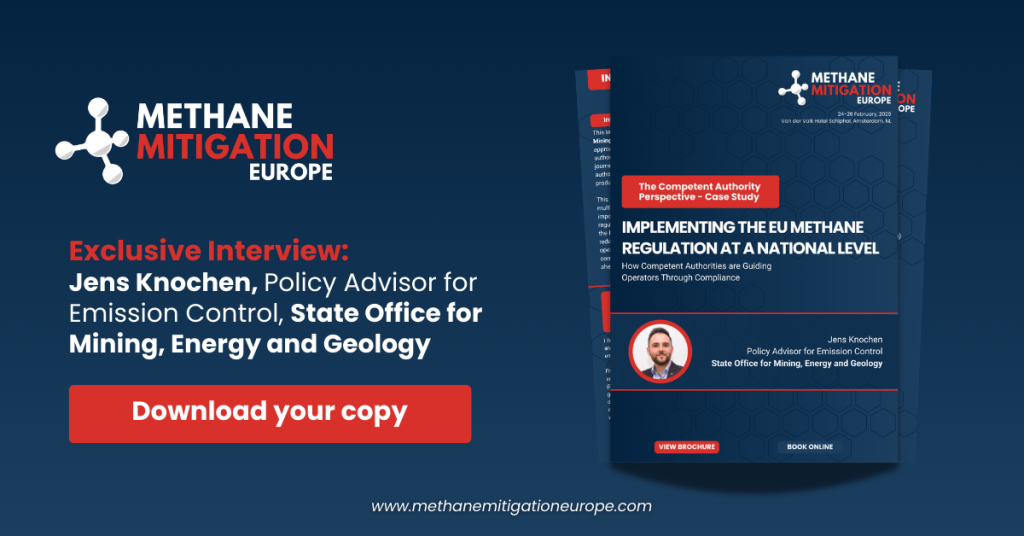
Read our exclusive interview with Jens Knochen for a Competent Authority perspective on regulatory enforcement, implementation challenges, and the practical realities of methane compliance across Europe: [ACCESS HERE]