Where Methane Policy Meets Operational Reality
Europe’s flagship forum connecting those shaping policy
with those delivering it
Main Conference Day 2: Thursday 18th March
7:30 am - 8:00 am
Check in and Networking Breakfast
8:10 am - 8:50 am
Keynote Panel: The EU Methane Regulation Goes Global: A New Chapter for International Methane Policy?
Maria Karagiannidou-Rosiek -
Head of Policy,
IOGP Europe
Valerie Ducrot - Executive Managing Director, Global Gas Centre
Europe's methane rules do not stop at its borders. From 1 January 2027, EU importers must demonstrate that relevant oil and gas supplies meet equivalent MRV requirements. As Europe's approach begins to influence how methane is measured, reported and verified beyond the EU, a bigger question is emerging: is Europe simply regulating its own imports, or beginning to reshape the global rules of the energy market?
• Hear from the global supply chain: How are producers and exporters across MENA, Asia, North America and beyond responding to a European methane framework that increasingly reaches into their operations?
• Examine Europe's influence: Is the EU approach becoming a reference point for methane MRV beyond European markets, and how are other producing regions responding to the emergence of a new benchmark?
• Debate the case for convergence: Could greater alignment around methane measurement, reporting and verification accelerate global emissions reductions, or risk imposing a fragmented patchwork of regional requirements?
• Consider the implications for global energy markets: If methane performance increasingly shapes how energy markets define responsible production, what could this mean for the future competitiveness, investment and market position of different producing regions?


8:50 am - 9:20 am
Presentation: Bridging the Gap: Redefining Source and Site-Level Inventory Reconciliation
Oleg Mikhailov -
Co-Founder & CEO,
Xplorobot
Reconciling top-down and bottom-up methane measurements is becoming central to building credible measurement-informed inventories. Yet many operators continue to compare datasets generated using fundamentally different technologies, each with its own detection thresholds and measurement characteristics. This case study examines how using the same OGI platform across both source-level inspections and drone-based site surveys can create more directly comparable datasets, reducing uncertainty and improving confidence in reconciliation.

• Discover how using the same OGI technology across source- and site-level surveys creates more directly comparable datasets for inventory reconciliation.
• Explore how drone-mounted OGI can accelerate facility-wide surveys whilst reducing the operational burden and cost of traditional inspection programmes.
• Understand how a unified measurement approach supports measurement-informed inventories and strengthens confidence in regulatory reporting and audit readiness.
• Learn how integrating aerial and ground-based inspections into a single workflow can improve data quality, simplify emissions management and support faster decision-making.
Sponsored by: Xplorobot

9:20 am - 9:50 am
Presentation: From Framework to Implementation: The Next Chapter of Methane Standardisation
Rod Robinson -
Principal Research Scientist,
National Physical Laboratory, UK
As methane regulation enters the implementation phase, standardisation efforts are accelerating to provide industry with consistent methodologies for measurement, leak detection, technology validation and emissions reporting. This session explores the latest progress across CEN and ISO, the growing role of standardisation in supporting the EU Methane Regulation, and what operators should expect as standards move from development into practical application.
• Gain an update on the latest progress across CEN TC264, TC234 and ISO, including recently completed standards and those currently under development supporting methane measurement and emissions management.
• Understand how emerging European Commission standardisation requests are shaping technical standards for leak detection, technology validation and implementation of the EU Methane Regulation.
• Explore how harmonised validation and verification methodologies are being developed to build confidence in methane detection technologies and enable consistent performance assessment across the market.
• Discover how standardisation is evolving from strategic direction to practical delivery, and what this means for operators preparing for future compliance, procurement and methane management programmes.

9:50 am - 10:05 am
Lightning Talk: The Maturation of Satellite Methane Quantification
10:05 am - 10:35 am
Networking Break
Upstream Stage
10:35 am - 11:05 am Case Study: Virtual Flights, Real Insights: Improving Offshore Drone-Based Methane Measurement Jolinde van de graaf - Program Manager, Shell Global Solutions International B.V.
As drone-based methane measurement becomes increasingly relevant to offshore operators, understanding how wind flow around complex infrastructure influences measurement results is critical to building confidence in the data. Shell's work using advanced wind-flow modelling around offshore platforms provides practical insight into how simulated "virtual flights" can help improve the interpretation and quantification of drone-based measurements. This case study will explore how modelling can reduce uncertainty, support reconciliation with bottom-up inventories and strengthen the evidence base for OGMP 2.0 Level 5 reporting.
• Explore how wind-flow modelling can simulate drone measurement campaigns around complex offshore infrastructure and inform practical survey design.
• Examine how platform-specific wind conditions can influence the interpretation and quantification of drone-based methane measurements.
• Understand how simulation can help identify and reduce uncertainty in measured emissions and strengthen confidence in measurement results.
• Consider how drone-based measurements can be reconciled with bottom-up inventories and used to strengthen OGMP 2.0 Level 5 reporting.
• Discuss the practical guidance emerging for both technology providers and operators seeking to improve the reliability and comparability of offshore methane measurements.


Upstream Stage
11:05 am - 11:35 am Presentation: From Methane Inventory to Abatement Strategy: Building the Roadmap to ReductionTSO/Storage Stage
10:35 am - 11:05 am Case Study: From Detection to Action: Building a Data-Driven Methane Reduction Strategy Matthew Williams - Climate Change Specialist, National Gas Transmission
National Gas has significantly expanded its approach to methane management, moving from 23 LDAR surveys every four years to almost 200 surveys annually and investing around £20 million across its methane reduction strategy over the past three years. Alongside expanding its in-house detection capability, the resulting data is now being used to inform asset maintenance, repair, investment decisions and the prioritisation of future survey activity. This case study will explore how National Gas has built a more proactive, data-driven approach to methane reduction across its network — and the lessons learned along the way.
• Explore the evolution of National Gas' methane mitigation strategy, from expanded leak detection and repair to broader approaches for reducing venting and fugitive emissions.
• Examine how National Gas developed an in-house LDAR capability and scaled its programme to deliver almost 200 surveys annually.
• Understand how consolidating leak data into a centralised view is enabling more granular analysis, from network and asset level down to individual components.
• Explore how emissions intelligence is being translated into action, informing repair and maintenance priorities, asset investment and future survey activity.
• Consider the lessons from National Gas' approach to building a practical, cost-effective methane management programme that can deliver sustained emissions reductions.

TSO/Storage Stage
11:05 am - 11:35 am Presentation: Inside the Pipeline: Using Intelligent Inspection to Identify and Reduce Methane LossesDSO Stage
10:35 am - 11:05 am Panel: The DSO Challenge: Building Lower-Methane Networks for the Future Energy Mix Rosemarie Van Eekelen - Senior Policy Advisor, Gas Asset Management, AllianderTorsten Haumerssen - Network Architect, Enexis
Gabrielle Gauthey - Secretary General, Gas Distributors for Sustainability


DSO Stage
11:05 am - 11:35 am Presentation: From Network Intelligence to Action: Turning Methane Data into DSO Abatement
12:45 pm - 1:45 pm
Lunch and Networking Break
Onshore Stage
1:30 pm - 2:00 pm Case Study: Developing a Near-Zero-Emission Compressor Station Through Stationary RecompressionOffshore Stage
1:30 pm - 2:00 pm Case Study: Flare Gas Recovery: Advancing Methane Abatement Offshore Ashleigh Newlands - Atmospherics and Emissions Advisor, Ithaca Energy (UK) Limited
MENA Stage
1:30 pm - 2:00 pm Panel: MENA Methane Leadership: Turning Regional Action into Strategic AdvantageMethane management across the Middle East and North Africa is moving beyond a purely regulatory agenda, with regional operators increasingly investing in measurement, abatement, collaboration and emissions intelligence. This panel will spotlight the initiatives shaping the region's methane agenda and explore the business case for action beyond compliance, from operational efficiency and resource conservation to access to lower-emissions markets and strengthening the competitiveness of the region's energy exports.
• Spotlight major regional methane initiatives and collaborations, and the role they are playing in accelerating measurement, mitigation and knowledge-sharing across MENA.
• Explore how leading operators are building methane management programmes suited to the region's diverse assets, operating environments and infrastructure.
• Examine the business case beyond regulation, including opportunities to reduce product loss, improve operational efficiency, optimise assets and protect the value of natural gas.
• Consider how stronger methane performance could increasingly influence market access, buyer expectations, financing and the competitiveness of MENA energy exports.
• Discuss where regional collaboration can accelerate access to technology, technical expertise, measurement capabilities and practical solutions.
• Look ahead at the role MENA could play in shaping the next phase of global methane action and what is needed to move from individual initiatives towards broader regional momentum.
3:00 pm - 3:30 pm
Closing Keynote: From Brussels to Member States: How Competent Authorities Are Interpreting and Enforcing the EU Methane Regulation
Jens Knochen -
Policy Advisor Emission Control, Public Authority for Mining, Energy and Geology,
Landesamt für Bergbau, Energie und Geologie
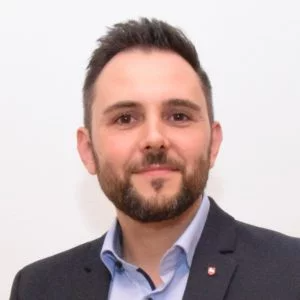
Jens Knochen
Policy Advisor Emission Control, Public Authority for Mining, Energy and GeologyLandesamt für Bergbau, Energie und Geologie