

Where Methane Policy Meets Operational Reality
Europe’s flagship forum connecting those shaping policy
with those delivering it
2027 Industry Insights
The TSO Methane Readiness Playbook: How Europe's Transmission System Operators Are Preparing for the Next Phase of Methane Regulation | Insights from Fluxys, NaTran, NET4GAS, Amber Grid
As methane management requirements continue to evolve across Europe, Transmission System Operators are balancing emissions reduction goals with the need to maintain network reliability, security of supply, and operational efficiency. With increasing expectations around measurement, reporting, and transparency, methane management is becoming a core operational priority across the transmission sector.
To explore how leading operators are responding, this report brings together insights from François Spitaels, Environment Manager at Fluxys, Jakub Peter, Team Leader - Emissions & Carbon Footprint Reduction at NET4GAS, Cristina Lopez, R&D Project Manager | Gas Detection & Methane Emissions at NaTran, and Brigita Berzinske, Operations & Maintenance Engineer at Amber Grid. Drawing on their experiences, they share practical perspectives on emissions measurement, reporting, technology deployment, compliance, and the organisational changes required to support long-term methane reduction.
In this report, you'll learn:
- Why maintaining network reliability remains a key consideration when implementing methane reduction strategies.
- How TSOs are strengthening methane measurement, reporting, and data accountability capabilities.
- What operators have learned from evaluating and deploying next-generation monitoring and detection technologies.
- How organisational readiness is becoming just as important as technical solutions for achieving compliance.
- Why collaboration between operators, regulators, and technology providers is accelerating progress across the sector.
Download the report to discover how Europe's leading TSOs are preparing for the next phase of methane management and what lessons can be applied across your own operations.
The TSO Methane Readiness Playbook: How Europe's Transmission System Operators Are Preparing for the Next Phase of Methane Regulation | LinkedIn
As methane management requirements continue to evolve across Europe, Transmission System Operators are balancing emissions reduction goals with the need to maintain network reliability, security of supply, and operational efficiency. With increasing expectations around measurement, reporting, and transparency, methane management is becoming a core operational priority across the transmission sector.
To explore how leading operators are responding, this report brings together insights from François Spitaels, Environment Manager at Fluxys, Jakub Peter, Team Leader - Emissions & Carbon Footprint Reduction at NET4GAS, Cristina Lopez, R&D Project Manager | Gas Detection & Methane Emissions at NaTran, and Brigita Berzinske, Operations & Maintenance Engineer at Amber Grid. Drawing on their experiences, they share practical perspectives on emissions measurement, reporting, technology deployment, compliance, and the organisational changes required to support long-term methane reduction.
In this report, you'll learn:
- Why maintaining network reliability remains a key consideration when implementing methane reduction strategies.
- How TSOs are strengthening methane measurement, reporting, and data accountability capabilities.
- What operators have learned from evaluating and deploying next-generation monitoring and detection technologies.
- How organisational readiness is becoming just as important as technical solutions for achieving compliance.
- Why collaboration between operators, regulators, and technology providers is accelerating progress across the sector.
Download the report to discover how Europe's leading TSOs are preparing for the next phase of methane management and what lessons can be applied across your own operations.
The DSO Methane Readiness Playbook: How Europe's Gas Distribution Operators Are Preparing for the Next Phase of Methane Regulation | Insights from JSC Gaso, GRDF
As methane regulation moves from policy into implementation, Distribution System Operators are facing growing expectations around emissions measurement, reporting, and reduction. While many of the industry's conversations have focused on upstream operators and transmission networks, DSOs face a unique set of challenges, from managing extensive legacy infrastructure to balancing regulatory compliance with long-term network investment.
To explore how operators are navigating this evolving landscape, this report brings together insights from Liliane Wietzerbin, Governance, Board of Directors & European Technical Support, GrDF, Frederic Masson, Methane Project Manager, GrDF, and Vinsents Makaris, Head of Corporate Governance & Compliance, JSC Gaso. Drawing on their experience, they share practical perspectives on methane measurement, leak detection and repair (LDAR), reporting requirements, asset modernisation, and the role of collaboration in driving meaningful emissions reductions.
In this report, you'll learn:
- Why methane management challenges can vary significantly between DSOs depending on network ownership models, infrastructure, and geography.
- What operators are learning from deploying advanced leak detection and quantification technologies in urban environments.
- Why asset replacement programmes may deliver greater emissions reductions than increasing survey frequency alone.
- How leading DSOs are preparing their people, processes, and data systems for a new era of methane reporting and transparency.
- The role of industry initiatives such as OGMP 2.0 in accelerating progress and sharing best practice across the sector.
Download the report to explore how Europe's gas distribution operators are navigating the next phase of methane regulation and what these lessons could mean for your own methane management strategy.
Interview | EU Methane Rules & Market Access: Navigating Uncertainty Around Equivalency | Featuring Insights from Courtney Loper
As implementation of the EU Methane Regulation progresses, questions around equivalency, certification, and compliance remain a key focus for producers, importers, and buyers alike. While regulatory frameworks continue to evolve, companies across the value chain are already making strategic decisions that could shape future market access and competitiveness.
In this interview, Courtney Loper, Head of Government Relations & Public Affairs at EQT Corporation, shares her perspective on the challenges and opportunities emerging from the EU's methane requirements. She discusses the importance of value chain collaboration, the impact of regulatory uncertainty on producers, the ongoing debate around equivalency, and why infrastructure considerations must remain part of the broader conversation around low-emissions gas.
In this interview, you'll learn:
- Why collaboration between producers, traders, certification bodies, and verification providers will be critical to successful implementation of the EU Methane Regulation.
- How uncertainty around equivalency and import requirements is affecting producer planning and investment decisions.
- Why emissions performance varies significantly across producing regions and what this could mean for future market access.
- The role of infrastructure and pipeline capacity in connecting lower-emissions gas supplies with international markets.
- What producers need from policymakers to support long-term compliance and commercial certainty.
Download the interview to explore how producers are navigating regulatory uncertainty and preparing for the next phase of EU methane compliance.
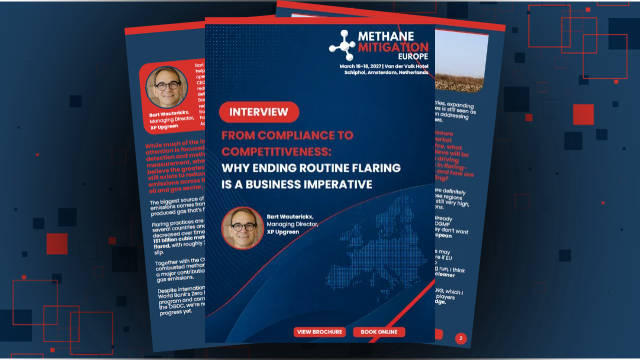
Interview | From Compliance to Competitiveness: Why Ending Routine Flaring Is A Business Imperative | Featuring Insights from Bart Wauterickx
Routine flaring remains one of the largest sources of methane emissions across the global oil and gas sector, yet progress on reducing flaring volumes has remained stubbornly slow. As regulatory pressure increases and buyers place greater emphasis on emissions performance, operators are facing growing expectations to turn commitments into measurable action.
In this interview, Bart Wauterickx, Managing Director at XP Upgreen, shares his perspective on why routine flaring continues to be such a persistent challenge, despite the technologies already being available to address it. He explores the economic and regulatory barriers holding back progress, the role of evolving market expectations, and why methane reduction should be viewed not simply as a compliance exercise, but as a driver of operational performance and long-term competitiveness.
In this interview, you'll learn:
- Why routine flaring remains one of the largest contributors to methane emissions globally.
- The key economic and regulatory barriers preventing wider deployment of flaring reduction solutions.
- How evolving EU regulations and market expectations are influencing operator behaviour.
- Why leading companies increasingly view emissions reduction as a source of business value rather than a cost.
- The practical steps operators can take to improve sustainability performance while maintaining operational efficiency.
Download the interview to explore why tackling routine flaring could become one of the industry's most important opportunities to reduce emissions while strengthening commercial competitiveness.
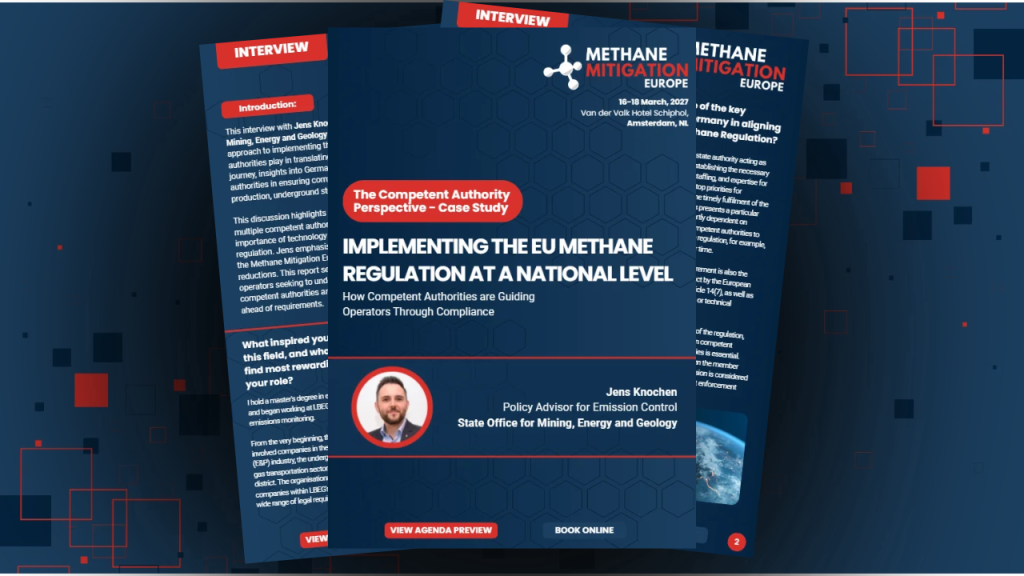
Interview | Insights from a Competent Authority Perspective: Implementing the EU Methane Regulation at a National Level
As the EU Methane Regulation (EUMR) moves further into implementation, gaining insight from a competent authority is invaluable. These advisors are responsible for translating regulatory requirements into practical enforcement frameworks, coordinating with industry, and ensuring compliance across complex operational networks.
With key reporting, monitoring, and methane intensity requirements continuing to come into force across Europe, operators face increasing pressure to understand evolving expectations and prepare for long-term compliance. To help navigate this changing landscape, we spoke with Jens Knochen, Policy Advisor for Emission Control at the State Office for Mining, Energy, and Geology (LBEG), to answer some critical questions:
- How can competent authorities ensure consistent enforcement across diverse sectors and operators?
- What role will innovation and technology play in meeting leak detection, monitoring, and emissions reduction requirements?
- How can collaboration between regulators and industry support effective implementation of the EUMR?
Download the full interview to explore:
- Germany's roadmap for implementing the EU Methane Regulation Key priorities and sector-specific challenges for competent authorities
- Practical strategies for reducing uncertainty and leveraging innovation
- Access the report now to gain actionable insights from the regulator's perspective and strengthen your compliance strategy
Access the report now to gain actionable insights from the regulator's perspective and strengthen your methane compliance strategy.
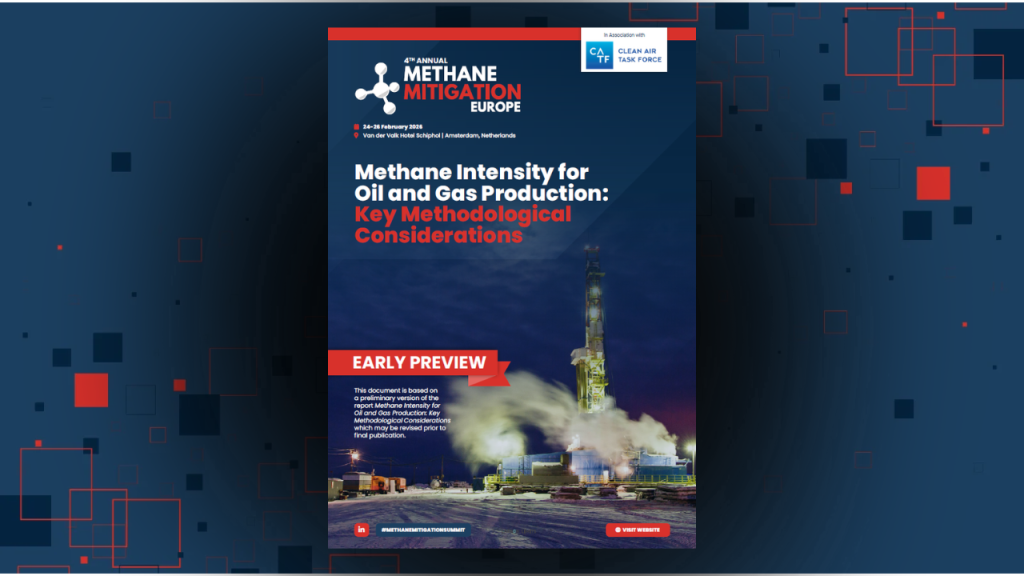
Clean Air Task Force's Key Methodological Considerations for Methane Intensity Reporting
As the EU Methane Regulation moves toward full implementation, understanding how methane intensity will be calculated is critical.
With the August 2027 deadline for the European Commission to define the official methodology approaching, operators face growing uncertainty. How will methane intensity be measured? How can operators prepare now to meet future standards?
To help you navigate this evolving landscape, Clean Air Task Force (CATF) has published a detailed analysis of the key methodological considerations for methane intensity reporting. The report explores:
- The EU Methane Regulation’s roadmap for MRV and mitigation obligations.
- Existing global methodologies, from OGCI and NGSI to IEA and EPA, and what they reveal about potential EU approaches.
- Critical formula choices: produced vs. marketed product, granularity, scope, and units of output.
- Implications for compliance and innovation, including how methodology decisions will impact operators and importers.
Download this report preview to gain actionable insights and prepare your organization for the next phase of the methane regulation.
This document is based on a preliminary version of the report Methane Intensity for Oil and Gas Production: Key Methodological Considerations which may be revised prior to final publication.
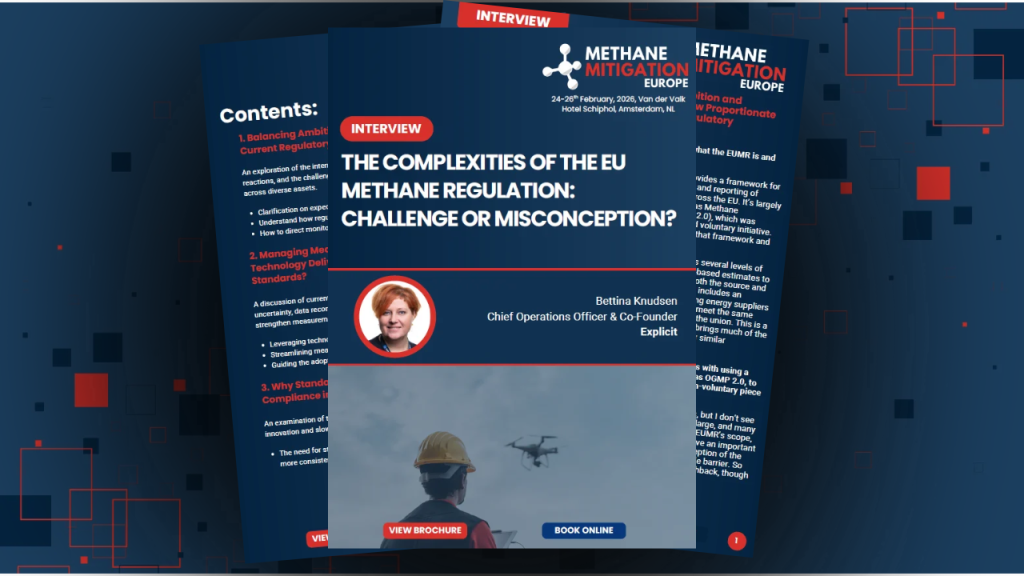
The Complexities of the EU Methane Regulation: Challenge or Misconception?
As the EU Methane Regulation (EUMR) moves closer to full enforcement, operators across Europe and beyond are grappling with the complexities caused by a lack of clear guidance and technical complexity. While the regulation aims to set a level playing field and accelerate climate progress, its practical implementation raises critical questions: Can technology keep pace with evolving regulations and operational demands? What does technical best practice look like in achieving compliance without excessive cost or complexity?
Having just passed the February 5th, 2026 deadline to submit MRV reports containing quantification of source-level methane emissions and with more deadlines to come in 2027, and uncertainty surrounding monitoring frequency, data reconciliation, and importer provisions, pressure is mounting. To help you navigate these challenges, we spoke with Bettina Knudsen, COO and Co-Founder of Explicit, a pioneer in drone-based methane detection, to uncover candid insights on:
- Balancing ambition and practicality: Why proportionality across emissions sources matters and how dynamic monitoring can make compliance more viable
- Managing measurement uncertainty: The realities of methane quantification and what technical best practice looks like as technology evolves
- Why standardisation matters: Building integrity and confidence in a rapidly innovating market
Download the full interview to explore:
- The biggest compliance hurdles operators face under the EUMR
- Proven strategies for reducing uncertainty and improving monitoring workflows
- How innovation, automation, and proportionality can transform methane mitigation efforts
Access the report to gain practical guidance on meeting regulatory requirements, optimising your monitoring strategy, and driving real emissions reduction.
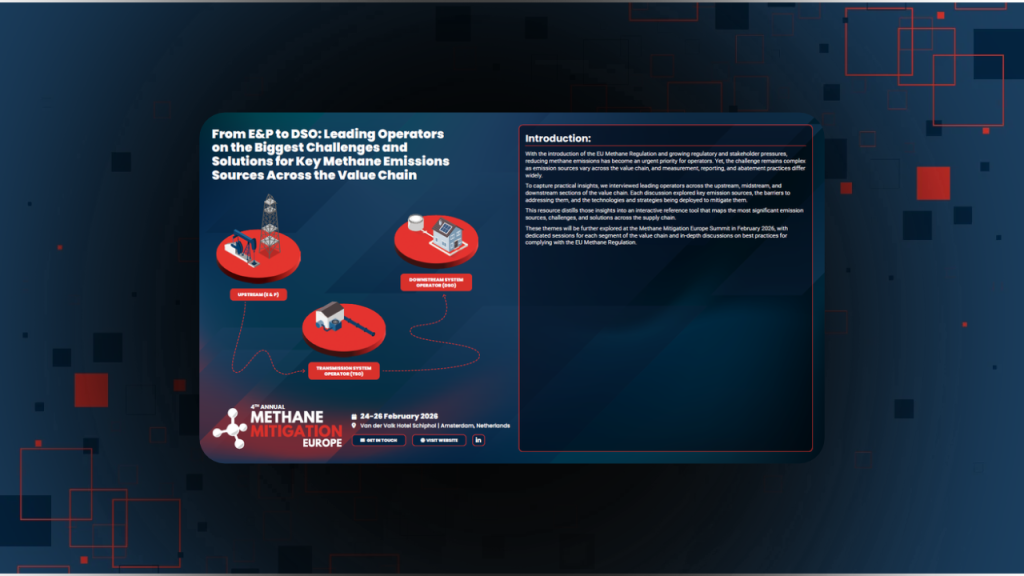
Leading Operators on the Biggest Challenges and Solutions for Key Methane Emissions Sources Across the Value Chain
After speaking with industry leaders, one key lesson stands out; “While many operators face similar challenges, each site is unique. You can’t simply copy and paste solutions from one location to another.”
With regulatory deadlines moving closer as well as growing stakeholder pressures, reducing methane emissions has become an urgent priority. To ensure technical best-practice and to stay ahead of regulatory or stakeholder scrutiny, whether you operate within the exploration and production, transmission, or distribution of oil and gas, it is crucial that you are aware of the pre-set paths to efficient emissions reduction, at each level of the value chain.
As the industry is racing against the clock to prepare for the EU MR, we sought to uncover practical, on-the-ground insights and provide you with proven strategies from peers within your unique operational setting. We spoke with expert leaders from across the upstream, transmission and distribution segments of the value chain; Bart Wauterickz, Managing Director at XP Upgreen, François Spitaels, Environment Manager at Fluxys, and Vinsents Makaris, Head of Corporate Governance and Compliance at JSC Gaso. These leaders shared candid perspectives on their most significant emission sources, the barriers to tackling them, and the innovative solutions being deployed to drive real results.
Download the infographic to explore:
- The key challenges that leading operators face in mitigating methane emissions across the value chain
- The technologies and strategies that are delivering measurable abatement success
- The lessons learned from successful emissions reduction efforts by XP Upgreen, Fluxys, and JSC Gaso, and their expectations for the future
Download this interactive infographic now to see where you can make the biggest impact on methane reduction, understand the challenges across the value chain, and identify the strategies being leveraged by your peers to efficiently reduce emissions.
In Partnership With:

QUESTIONS?
Address: IQPC Ltd, 129 Wilton Road,
London SW1V 1JZ
Telephone: +44 (0) 113 210 042
Fax: 44 (0) 207 368 9301
Email: enquire@iqpc.co.uk

©2026 IQPC. All rights reserved.


