Welcome to the Methane Mitigation Europe Summit
Europe's Flagship Summit Dedicated to Oil & Gas Methane Reduction
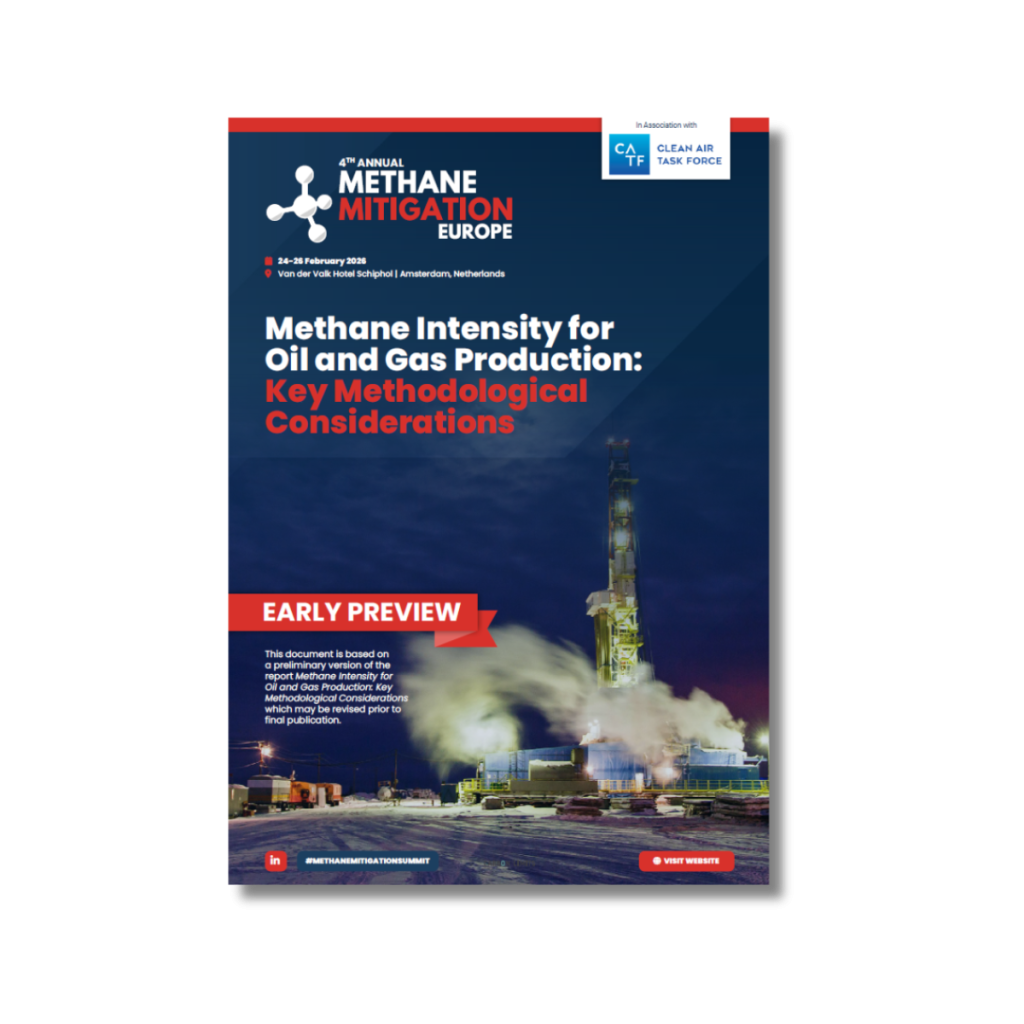
Clean Air Task Force's Key Methodological Considerations for Methane Intensity Reporting
As the EU Methane Regulation moves toward full implementation, understanding how methane intensity will be calculated is critical.
With the August 2027 deadline for the European Commission to define the official methodology approaching, operators face growing uncertainty. How will methane intensity be measured? How can operators prepare now to meet future standards?
To help you navigate this evolving landscape, Clean Air Task Force (CATF) has published a detailed analysis of the key methodological considerations for methane intensity reporting. The report explores:
- The EU Methane Regulation’s roadmap for MRV and mitigation obligations.
- Existing global methodologies, from OGCI and NGSI to IEA and EPA, and what they reveal about potential EU approaches.
- Critical formula choices: produced vs. marketed product, granularity, scope, and units of output.
- Implications for compliance and innovation, including how methodology decisions will impact operators and importers.
Download this report preview to gain actionable insights and prepare your organization for the next phase of the methane regulation.
This document is based on a preliminary version of the report Methane Intensity for Oil and Gas Production: Key Methodological Considerations which may be revised prior to final publication.
In Partnership With:

QUESTIONS?
Address: IQPC Ltd, 129 Wilton Road,
London SW1V 1JZ
Telephone: +44 (0) 113 210 042
Fax: 44 (0) 207 368 9301
Email: enquire@iqpc.co.uk

©2026 IQPC. All rights reserved.