Welcome to the Methane Mitigation: Technology & Innovation World Summit
Where Technical Excellence Meets Strategic Leadership: Aligning Emissions Reduction with Business Performance
Where Technical Excellence Meets Strategic Leadership: Aligning Emissions Reduction with Business Performance
Interview

Download today - The 2025 Methane Technology Directory
Released ahead of the Methane Mitigation: Technology & Innovation Summit, we compiled a free guide highlighting each technology and solution provider involved in the event.
In the 2025 Methane Technology Directory, you will find insights into the industry challenges each sponsor is tackling, the unique value their technology delivers, and how the team can support operators in attendance.
For example, here are some of the things covered in the directory:
- Page 2 - Details of Endeavour Inspired Infrastructure and Envana's solutions and details of their representatives
- Page 4 - Cimmaron's leading-edge products, services and real-time monitoring systems
- Page 6 - Momentick Emissions Intelligence's multi-source satellite imagery
- Page 9 - GHGSat's pioneering emissions-monitoring capabilities
Download the free directory today to learn more about the leading solutions. To discuss sponsorship opportunities and position yourself in a similar way, please get in touch.
Stories from the Field: How Frontline Engineering Teams are Cutting Emissions while Improving Operational Performance
As emissions performance expectations become increasingly stringent, frontline engineering teams are being tasked with embedding methane management into day-to-day workflows, not as a standalone environmental obligation, but as a practical driver of uptime, safety, asset reliability, and cost efficiency. Leading teams are demonstrating how this integration helps eliminate avoidable events and strengthen operational performance.
To understand how this is being done in practice, we spoke with Martina Sittler (Targa Resources) and Joe Leonard (Devon Energy). They share field‑level insight into how their teams are integrating methane management into everyday workflows, aligning more closely with sustainability teams, and using emissions data to strengthen both environmental outcomes and operational KPIs.
In this exclusive guide, they break down:
- How methane management is being integrated alongside reliability, safety, and cost‑efficiency priorities.
- Lessons from deploying detection, monitoring, and prevention technologies in live operating environments.
- How workforce engagement and field validation help translate sustainability goals into operational results.
- Why methane performance is increasingly seen as a signal of operational discipline and commercial resilience.
With tightening expectations and rising scrutiny, this shift is becoming increasingly important. Download your copy to see how frontline engineering teams are embedding methane management into day‑to‑day operations, and how this approach is helping unlock safer, more reliable, and more efficient performance.
Navigating the Methane Reporting Vacuum: How Operators can Maintain Credibility and Transparency in a Post-GHGRP World
With the EPA’s proposed rollback of GHGRP creating a “reporting vacuum,” operators are under growing pressure to maintain credibility, consistency, and comparability across methane reporting frameworks at a time when global import standards are tightening. In this new landscape, reporting accuracy isn’t just a compliance expectation; it’s becoming a core component of market access, investor confidence, and commercial resilience.
To understand how operators are navigating this shift, we spoke with industry leaders Josh Carlisle (BKV Corporation) and Ethan Boor (Camino Natural Resources). They reveal how their teams are safeguarding data quality, managing competing frameworks, and preserving transparency as the U.S. moves into a post‑GHGRP environment.
In this exclusive guide, they break down:
- How the absence of a unified U.S. framework is reshaping credibility and comparability.
- Practical steps operators are taking to maintain high‑quality, defensible data.
- The risks of fragmented standards, and where innovation may fill the gap.
- How international rules like OGMP 2.0 and the EU import standard are influencing U.S. reporting decisions.
- What a future “ideal” methane reporting ecosystem could look like.
Download your copy to understand how your peers are navigating uncertainty and how operators can maintain transparency and trust amid shifting regulatory expectations.
Securing Budget for Methane Technology in 2026: How your Peers are Repositioning Methane Technology Investments as OPEX and Market Access Tools
As U.S. federal regulatory uncertainty and tightening global market expectations converge, operators are under growing pressure to make smarter, faster, and more defensible decisions about methane technology investment. 2026 is bringing new scrutiny from international import rules and shifting domestic requirements, along with the EPA pushing U.S. operators to increase production to ensure continued energy security globally. As a result, securing budget is no longer just about compliance; it’s about unlocking operational performance enhancement, market access, and long‑term business value.
To understand how operators are navigating this challenge, we spoke with two industry leaders, Brian Shpakoff, Environmental Manager (Crescent Energy) and Paul Espenan, Senior Vice President – EHS&R (Diversified Energy), who are at the forefront of reframing methane technology as an operational asset rather than a cost burden.
In this exclusive guide, they break down the real‑world strategies, data, and internal messaging that are helping teams unlock budget and integrate methane management into core operational workflows.
Download the full report to explore:
- How operators are reframing methane technology from compliance cost to OPEX optimization
- Practical methods for quantifying ROI and communicating value internally
- How close collaboration with technology providers can help operators build more credible, data-backed internal proposals
- Strategies for maintaining budget amid regulatory uncertainty
- Real‑world examples of methane technology improving operational performance
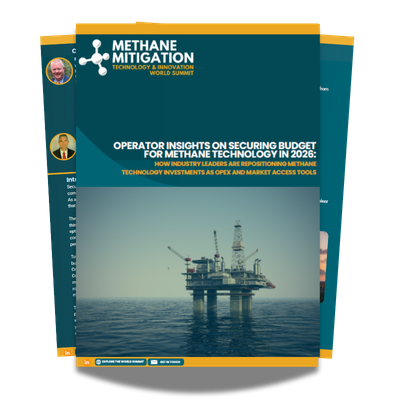
Operator Insights on Securing Budget for Methane Technology in 2026: How Industry Leaders are Repositioning Methane Technology Investments as OPEX and Market Access Tools
With the U.S. regulatory landscape fluctuating and global market access pressures rising, operators are rethinking how they evaluate methane technology investments. Ongoing shifts to the Greenhouse Gas Reporting Program (GHGRP) and renewed debate around the repeal of the EPA’s 2009 GHG Endangerment Finding have added complexity to domestic compliance signals. At the same time, mounting export requirements in Europe and Asia are raising the bar for methane data that is credible, certifiable, and market-ready.
Securing budget in 2026 is no longer just about meeting regulatory obligations. It’s about protecting uptime, reducing labor intensity, keeping more product in the pipeline, and strengthening access to premium markets. Methane management is being reframed from a compliance cost to an operational performance lever.
To understand how operators are navigating this shift, we spoke with two industry leaders who are actively shaping internal investment strategy and vendor collaboration models, Brian Shpakoff, Environmental Manager (Crescent Energy) and Paul Espenan, Senior Vice President – EHS&R (Diversified Energy). They share how they evaluate methane technology partners, what earns internal buy-in, and why early collaboration with providers is becoming a competitive advantage.
In this exclusive guide, you’ll discover:
- How operators are reframing methane technology as an operational performance enhancer
- What kind of data, case studies, and ROI metrics accelerate internal approval
- Why early-stage collaboration with technology providers leads to better outcomes
- How global market access pressures are reshaping methane data expectations
- Real-world examples of leak reduction, LDAR improvements, and product recovery driving long-term investment
Download the full report to explore how leading operators are securing budget, strengthening market access, and building more defensible methane investment strategies in an increasingly uncertain regulatory landscape.

The 2025 Methane Technology Directory
Released ahead of the 2025 Methane Mitigation: Technology & Innovation Summit, we recently compiled a free guide highlighting each technology involved.
In the 2025 Methane Technology Directory, you will find insights into the industry challenges they’re solving, the value their technology brings, and how they could support your organization. For example:
- On page 2, connect with expert representatives from Endeavour Inspired Infrastructure and Envana
- On page 4, explore Cimmaron's leading-edge products, services and real-time monitoring systems
- On page 6, learn about Momentick Emissions Intelligence's multi-source satellite imagery
- On page 9, delve into GHGSat's pioneering emissions-monitoring capabilities
Download the free directory today to learn more about the leading solutions available to help you measure, monitor and mitigate your methane emissions.
Information about the 2026 summit to be released soon.

The Methane Imperative: Industry Leader’s Perspectives on Policy, Technology, and Collaboration in a Shifting Landscape
Featuring insights from representatives at bp, Kinder Morgan, OGCI, IOGP, Methane Guiding Principles, and MELA, our latest report explores:
- How regulatory frameworks influence investment decisions and operational strategies
- The role of advanced technologies in detecting, measuring, and mitigating methane emissions
- The value of emissions data in enhancing reporting accuracy, driving decision making and building stakeholder confidence
- The importance of collaboration among O&G companies, technology providers, regulators, and industry associations or initiatives
Download your copy today!

A Guide to OGMP 2.0 Level 4 and Level 5 Reporting and Measurement Framework
With the implementation of compliance deadlines in 2025, over 140 companies have now joined the UNEP’s Oil & Gas Methane Partnership 2.0 (OGMP 2.0), the leading methane emissions reporting and measurement framework.
The OGMP 2.0 framework helps oil and gas companies mitigate methane emissions by providing standardised guidelines for accurate monitoring, reporting, and reduction of methane leaks.
Download our brand-new guide to uncover insights from OGMP 2.0 Senior Advisors, Tania Meixús and Lisa Solomchuk, as they uncover best practice for navigating OGMP 2.0, and provide you with expertise on: Gold standard reporting, including the recommended Level 5 reporting process, increasing data quality for a more effective methane strategy, how the OGMP 2.0 framework aligns with regulatory requirements, and more.

On-Demand Webinar: Critical Considerations for Building Your Methane Mitigation Strategy
Ahead of this June's Methane Mitigation Global Summit, we sat down with leading oil & gas experts and asked, what are the key considerations and factors that you must consider when designing and enhancing your methane mitigation strategy?
Available to watch right now, watch and listen as industry experts and operators weigh in on the critical components you need to consider as you formulate your strategy, how to select and identify appropriate technology, and key advice on what it takes to truly drive lower methane emissions in your operations.
Sharing insights in this webinar are:
- Sonna Sathiamoorthy, Methane Program Manager and SME, BP
- Roland Muwanga, VP Energy Transition, Technical and Operations Strategy, TC Energy
- Erin Tullos, Consultant, OGMP 2.0
- Harry Granqvist, Senior Climate Analyst in Responsible Investments, Nordea Asset Management
Available on-demand, watch now, or save it until later!

Mobilizing to Meet Global Standards on Methane Emissions at Petrobras
When Brazilian oil giant Petrobras signed an agreement with the UN’s Oil and Gas Methane Partnership 2.0 (OGMP) earlier this year, it cemented its commitment to a lower emission future.
OGMP 2.0 is a global initiative that focuses on the measurement and reporting of methane emissions in oil and gas operations in order to reduce them. Methane is a potent greenhouse gas and oil and gas operations account for approximately one third of human-caused methane emissions.
In its strategic plan, Petrobras says that it aims to neutralize emissions by 2050 and is investing US $4.4 billion in decarbonization projects and technology.
In this interview, Rodrigo Barbosa, Upstream Partnership Coordinator, and Roberto Gennaro, Planning Manager, Petrobras, talk about the national oil giant’s methane mitigation efforts, mobilizing support to reach OGMP’s gold standard, the challenges for the year ahead, and the lessons they’ve learned along the way.

Designing out Methane Emissions at TotalEnergies
TotalEnergies has signed on to tough new targets to reduce methane emissions by 80% and flaring to zero by 2030. How do they expect to achieve it?
We sat down with David Mendelson, President & CEO at TotalEnergies E&P Americas to find out...
“It’s part of our daily work now. Reducing emissions is given equal importance to everything we do in our operations” explains David.
In this interview, David Mendelson discusses the company’s approach to reducing the methane intensity in existing and new production assets, his thoughts on the energy transition and how the company folds emissions reduction into its daily operations. Access your free copy of the interview today.
Not to be missed, David also discusses:
- How TotalEnergies is creating more energy from a greater diversity of energy sources
- The journey so far to lower carbon and lower methane intensity in TotalEnergies' operations
- The role of the Operations team in lowering emissions
- The biggest challenges that confront the industry in meeting methane emissions goals
Read the interview in full today!
In Partnership With:

QUESTIONS?
Address: IQPC Ltd, 129 Wilton Road,
London SW1V 1JZ
Telephone: +44 (0) 113 210 042
Fax: 44 (0) 207 368 9301
Email: enquire@iqpc.co.uk

©2026 IQPC. All rights reserved.