
Welcome to the Methane Mitigation America Summit
Strengthening America's Energy Advantage Through Methane Leadership
2026 Industry Insights
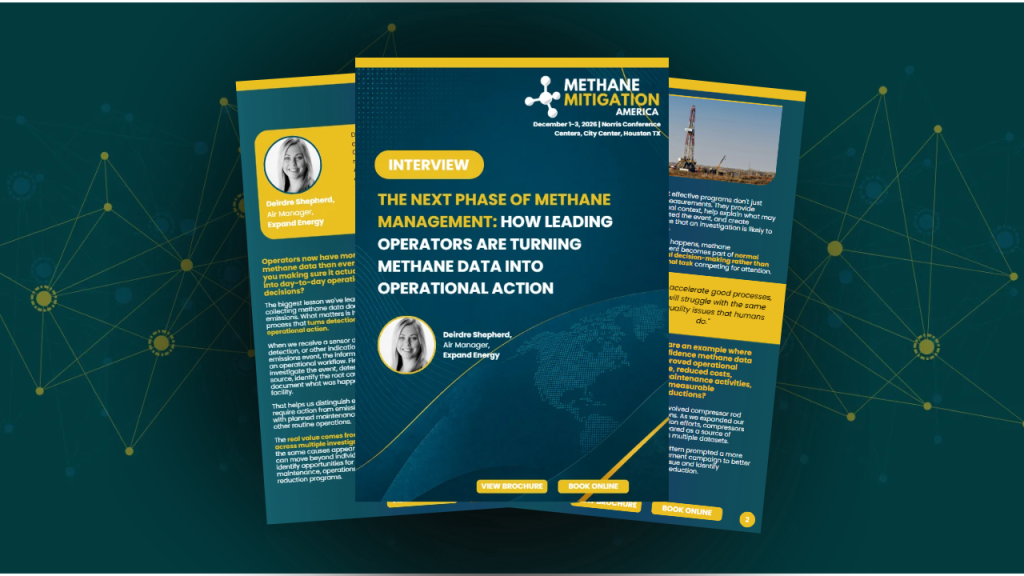
Interview | The Next Phase of Methane Management: How Leading Operators are Turning Methane Data into Operational Action | Featuring Insights from Deirdre Shepherd
As methane management programs mature, operators are increasingly shifting their focus from detecting emissions to ensuring that methane data drives more efficient and effective operational decisions. The challenge is no longer a lack of information, but how to turn growing volumes of emissions data into actionable insights that improve performance, optimize maintenance, and deliver meaningful emissions reductions.
In this exclusive interview with Deirdre Shepherd, Air Manager at Expand Energy, you'll gain practical insights into how one of North America's largest natural gas producers is turning methane measurements in operational value. Drawing on firsthand experience across data management, emissions reduction initiatives, and measurement-informed decision-making, Deirdre Shepherd shares lessons on building data confidence, driving operational adoption, leveraging digital tools, and identifying the next opportunities for methane reduction.
Download the interview to learn:
- How methane data can be embedded into day-to-day operational decision-making
- Lessons learned from reconciling top-down measurements and bottom-up inventories
- What it takes to build trust in methane data and drive action across operations teams
- Where AI and digital emissions platforms are delivering real value, and where expectations may be too high
- Why the next phase of methane reduction will depend on operational process change, not just better technology
Download your copy now to explore how leading operators are transforming methane measurements into operational improvements, stronger data confidence, and more effective emissions reduction strategies.
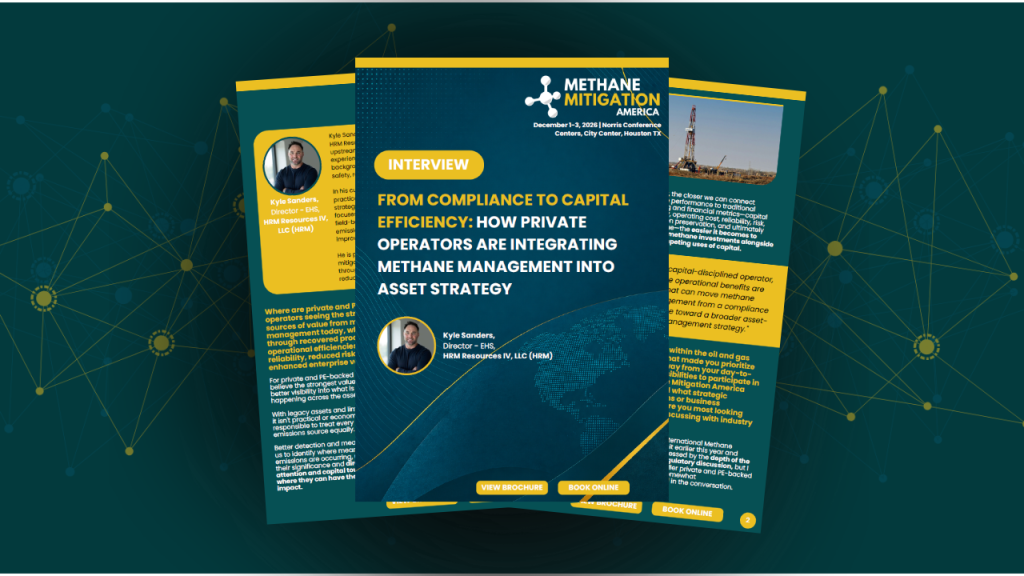
Interview | From Compliance to Capital Efficiency: How Private Operators Are Integrating Methane Management into Asset Strategy | Featuring Insights from Kyle Sanders
As methane management evolves, operators are increasingly looking beyond compliance and asking a more fundamental question: how can methane data create tangible business value? For private and PE-backed operators, methane investments must compete with other operational priorities, making it critical to demonstrate clear returns through improved reliability, reduced product loss, smarter maintenance, and more informed capital allocation.
In this exclusive interview with Kyle Sanders, Director - EHS at HRM Resources IV, LLC, learn how private operators are integrating methane management into broader asset management strategies and using emissions data to drive better operational and investment decisions.
Download the interview to learn:
- How leading operators are connecting methane management to capital efficiency, operational performance, and asset value.
- Why better emissions visibility enables teams to prioritize maintenance, reduce product loss, and improve asset reliability.
- Which methane performance indicators matter most when evaluating investment decisions and program effectiveness.
- How operators are shortening the cycle between emissions detection and corrective action to accelerate results.
- What it takes to integrate methane management into day-to-day asset management and maintenance processes, rather than treating it solely as a compliance initiative.
Download your copy now to discover how private and PE-backed operators are transforming methane management from a compliance requirement into a driver of operational performance, capital discipline, and long-term asset value.
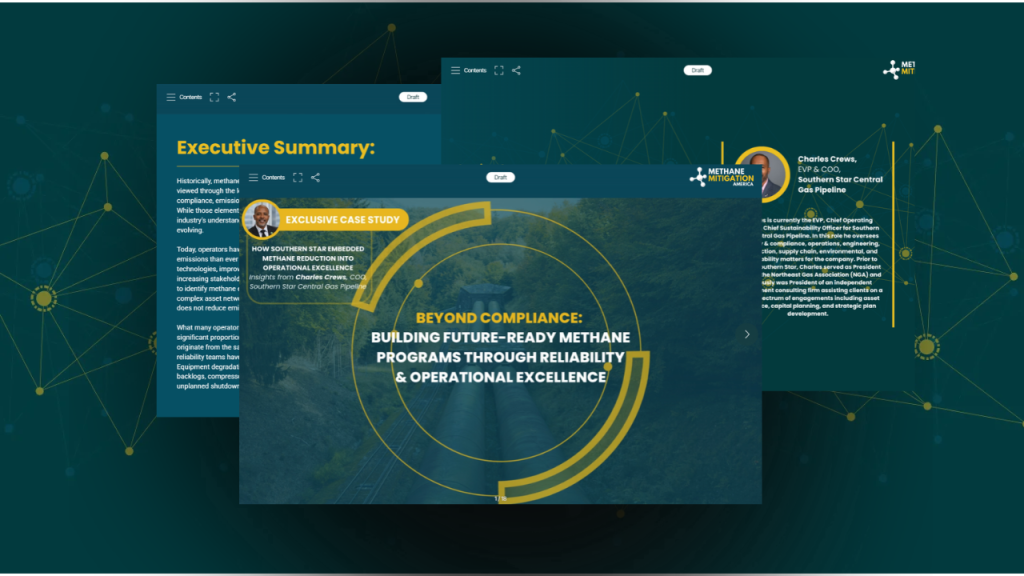
Report | Beyond Compliance: Building Future-Ready Methane Programs Through Reliability & Operational Excellence | Featuring Exclusive Southern Star Case Study
Methane management is no longer solely an environmental or compliance challenge. As operators face increasing pressure to reduce emissions while maintaining reliability, safety, and operational performance, many are recognizing that methane reduction and asset reliability are intrinsically linked. Equipment failures, maintenance backlogs, compressor issues, venting events, and unplanned shutdowns can all contribute to methane emissions while simultaneously impacting operational efficiency and uptime.
In this exclusive report & case study featuring Charles Crews, EVP & COO of Southern Star Central Gas Pipeline, discover how one operator is embedding methane management into reliability programs, maintenance planning, and operational decision-making. Drawing on Southern Star's methane reduction journey, Rhoades shares practical insights into how stronger asset management, predictive maintenance, operational discipline, and workforce engagement can help operators deliver sustainable emissions reductions while improving overall asset performance.
Download the report to learn:
- Why leading operators are increasingly treating methane performance as a measure of operational excellence, not just environmental compliance
- How reliability, maintenance, and asset management programs can become powerful drivers of sustained methane reduction
- What operational challenges, including equipment degradation, maintenance backlogs, and unplanned shutdowns, are really driving emissions events
- How improved emissions visibility is helping organizations make more data-driven maintenance and investment decisions
- Lessons learned from Southern Star's successful blowdown reduction initiatives and reliability-driven methane strategy
- Why building a culture of ownership, accountability, and equipment stewardship is essential for long-term emissions performance
- The key principles behind the next generation of future-ready methane management programs
Download your copy now to discover how integrating methane management with reliability and operational excellence can help operators reduce emissions, improve performance, and build more resilient operations for the future.
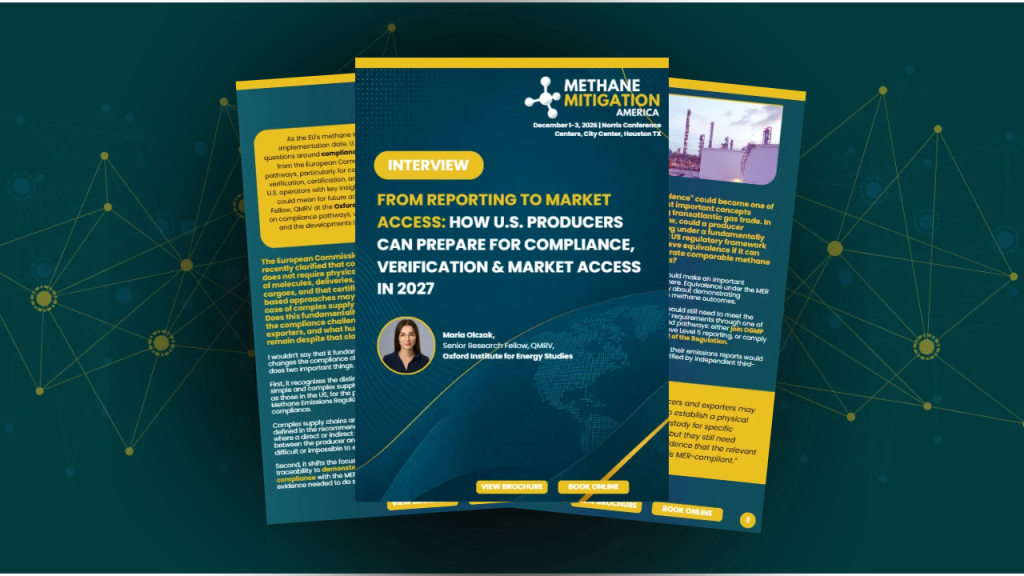
Interview | From Reporting To Market Access: How U.S. Producers Can Prepare For Compliance, Verification & Market Access In 2027 | Featuring Insights From Maria Olczak
As the EU Methane Regulation's import requirements move closer to implementation, U.S. producers and exporters are facing growing pressure to demonstrate credible methane measurement, verification, and reporting practices. Regulatory expectations are becoming clearer, but important questions remain around compliance pathways, certification, verification readiness, and future market access.
In this exclusive interview with Maria Olczak, Senior Research Fellow, QMRV at the Oxford Institute for Energy Studies, you'll gain expert insight into how the EU's evolving methane framework could reshape transatlantic gas trade. Drawing on her research into methane policy, regulation, and emissions verification, Olczak explains what U.S. operators should be doing now to prepare for 2027 and beyond.
Download the interview to learn:
- How recent EU guidance is changing the compliance challenge for complex supply chains
- Why credible emissions data and third-party verification will be critical to maintaining market access
- What safeguards are needed to ensure the integrity of certification and trace-and-claim approaches
- Why operators should begin preparing now rather than waiting for full regulatory certainty
- Whether verification capacity and accreditation frameworks will be ready for implementation by 2027
- How compliance readiness could create new competitive advantages for U.S. producers in global gas markets
Download your copy now to discover how evolving EU methane requirements could impact compliance, verification, and market access, and what U.S. producers can do today to position themselves for success in 2027.
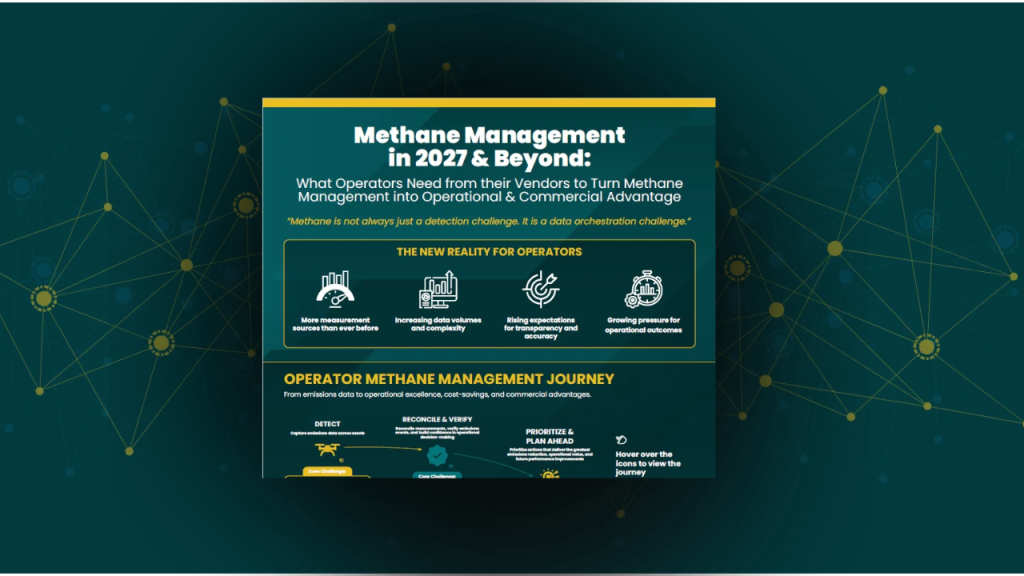
Interactive Infographic | Methane Management in 2027 & Beyond: What Operators Need from their Vendors to Turn Methane Management into Operational & Commercial Advantage
Methane emissions data management is entering a new phase. As operators deploy more measurement technologies and generate increasing volumes of emissions data, the challenge is no longer simply detecting emissions. It's about integrating data, building confidence in measurements, and turning insights into operational action.
This interactive infographic explores how leading operators are navigating this transition. It highlights the key challenges that emerge at every stage of the methane management journey, from detection and verification through to operational response, reporting, and governance. It also reveals where vendors can create value by helping operators turn emissions data into actionable business insights.
In this interactive resource, you'll discover:
- Why operators are struggling with fragmented data sources, increasing measurement volumes, and growing expectations for transparency.
- How leading organizations are building trust in emissions data and improving confidence in decision-making.
- The biggest challenges operators face when attempting to prioritize emissions events, allocate resources, and maximize operational impact.
- How evolving requirements such as OGMP 2.0, measurement-based reporting, and the EU Methane Regulation are reshaping methane program priorities.
- What vendors must do to move beyond detection and demonstrate how they can help operators achieve operational excellence, commercial resilience, and regulatory confidence.
Featuring insights from Josh Carlisle (BKV Corporation), Ethan Boor (Camino Natural Resources), Maggi Young (Expand Energy), Jacob Mihelich (Dugan Production), and Martina Sittler (Targa Resources), this infographic provides a practical look at how methane management is evolving across the oil and gas sector.
Download the infographic to learn how leading operators are transforming methane data into measurable operational, commercial, and regulatory advantages.
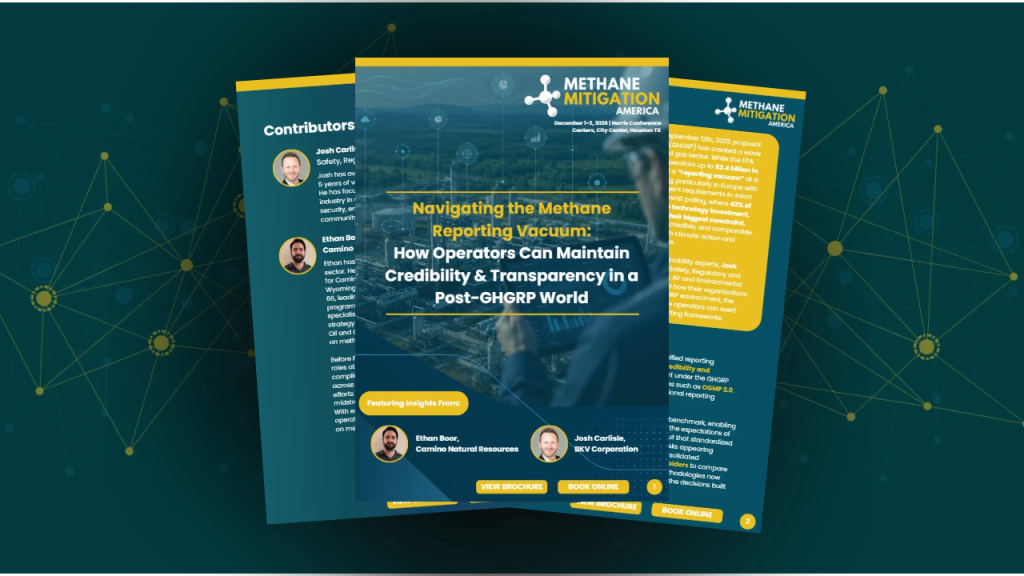
Double Interview | Navigating the Methane Reporting Vacuum: How Operators can Maintain Credibility & Transparency in a Post-GHGRP World
With the EPA's proposed rollback of GHGRP creating a "reporting vacuum," operators are under growing pressure to maintain credibility, consistency, and comparability across methane reporting frameworks at a time when global import standards are tightening. In this new landscape, reporting accuracy isn't just a compliance expectation; it's becoming a core component of market access, investor confidence, and commercial resilience.
To understand how operators are navigating this shift, we spoke with industry leaders Josh Carlisle (BKV Corporation) and Ethan Boor (Camino Natural Resources). They reveal how their teams are safeguarding data quality, managing competing frameworks, and preserving transparency as the U.S. moves into a post‑GHGRP environment.
In this exclusive guide, they break down:
- How the absence of a unified U.S. framework is reshaping credibility and comparability.
- Practical steps operators are taking to maintain high‑quality, defensible data.
- The risks of fragmented standards, and where innovation may fill the gap.
- How international rules like OGMP 2.0 and the EU import standard are influencing U.S. reporting decisions.
- What a future "ideal" methane reporting ecosystem could look like.
Download your copy to understand how your peers are navigating uncertainty and how operators can maintain transparency and trust amid shifting regulatory expectations.
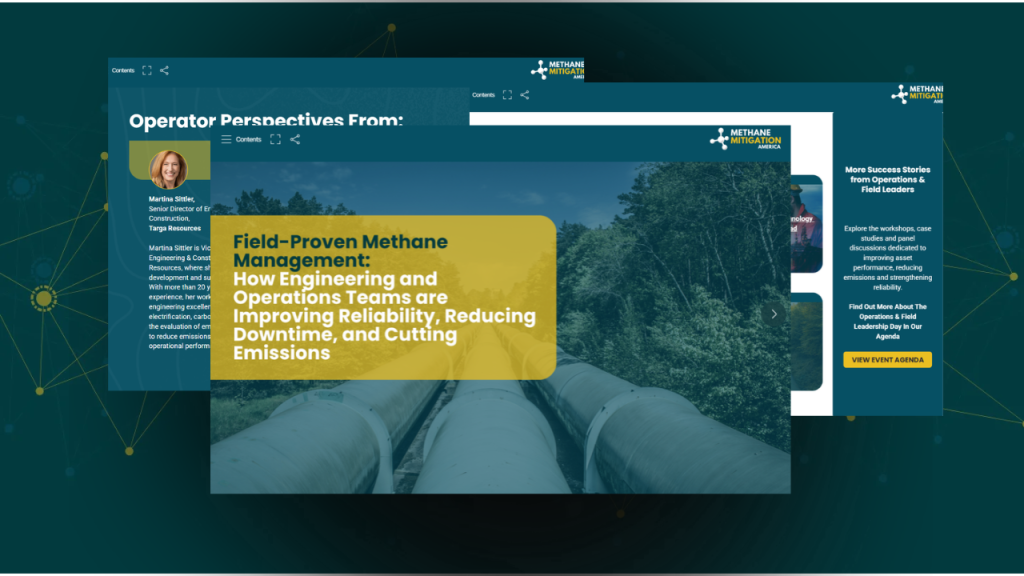
Report | Field-Proven Methane Management: How Engineering and Operations Teams are Improving Reliability, Reducing Downtime, and Cutting Emissions
Methane management is increasingly becoming a core component of operational excellence across the oil and gas industry. As engineering, maintenance, and field teams focus on improving reliability, reducing downtime, and optimizing asset performance, many are finding that the same initiatives also deliver significant methane emissions reductions.
In this exclusive industry report, operations and engineering leaders from Targa Resources, Devon Energy, and Southern Star Central Gas Pipeline share real-world experiences and practical lessons on integrating methane management into day-to-day operations to drive measurable business value.
Key Takeaways Include:
- How leading operators align methane management with uptime, safety, and cost-efficiency targets
- Why leading organizations are shifting from leak detection to proactive emissions prevention
- How facility design, maintenance strategies, and operational improvements are reducing methane emissions while improving performance
- Which methane monitoring and detection technologies provide genuine operational value in the field
- How cross-functional collaboration helps embed methane management into everyday operational decision-making
- Key lessons from industry leaders on scaling successful methane reduction initiatives across complex operations
Download the report to discover how leading operators are transforming methane management from a compliance requirement into a driver of operational performance, reliability, and long-term business value.
In Partnership With:

QUESTIONS?
Address: IQPC Ltd, 129 Wilton Road,
London SW1V 1JZ
Telephone: +44 (0) 113 210 042
Fax: 44 (0) 207 368 9301
Email: enquire@iqpc.co.uk

©2026 IQPC. All rights reserved.


